
The Simcan Difference: Why Diabetic Socks Are Not Just Regular Socks
What's actually in that package — and why it matters for your feet
If you or someone you care for has diabetes, you've probably been told to wear diabetic socks. Maybe you nodded, bought a package from the pharmacy, and weren't entirely sure what made them different from the drawer full of regular socks you already own.
It's a reasonable question. On the surface, they look similar. But the design differences between diabetic socks and regular socks are meaningful — and for people with diabetes or other conditions that affect circulation and sensation in the feet, those differences genuinely matter.
At Sole Renewal, we carry Simcan diabetic socks — a Canadian brand designed specifically for people with sensitive feet and circulatory concerns. Here's what makes them different, and why we recommend them.
Why Socks Matter More Than You Think for Diabetic Feet
Diabetes affects the feet in two significant ways: it can damage the nerves (peripheral neuropathy), reducing or eliminating sensation, and it can impair circulation (peripheral vascular disease), slowing the body's ability to heal. Either of these alone creates significant vulnerability in the feet. Together, they create a situation where even small, preventable problems — a blister, a pressure point, a seam rubbing against a toe — can become serious wounds.

The challenge is that reduced sensation means a person with diabetic neuropathy may not feel a sock seam cutting into a toe, a too-tight elastic digging into the ankle, or the warmth of early inflammation signaling trouble. By the time they notice, the damage is done.
This is why what you put on your feet every single day is a health decision — not just a comfort one.
What Makes Simcan Diabetic Socks Different
Simcan socks are designed with several specific features that address the unique needs of diabetic and circulation-compromised feet:
Seamless construction. Standard socks have seams — particularly at the toe — that create ridge-like pressure points against the skin. For a person with healthy sensation, these seams are simply uncomfortable. For a person with neuropathy, they can cause abrasions and blisters that go unnoticed and unaddressed. Simcan socks are knitted without seams, eliminating these pressure points entirely.
Non-binding, non-constricting tops. Many regular socks have elastic bands at the top that grip the leg firmly. For people with poor circulation or swelling, this constriction can further impede blood flow and leave deep impressions in the skin. Simcan socks are designed with a gentle, non-binding top that stays up without gripping.
Moisture-wicking properties. Moisture between the toes and around the foot creates the warm, damp conditions that encourage bacterial and fungal growth. Simcan fabrics are designed to wick moisture away from the skin, keeping the foot drier throughout the day.
Extra depth and a gentle fit. The construction allows for more space around the toes, reducing the risk of pressure on any individual toe — important for people with structural foot changes, bunions, or hammertoes.
Soft, non-irritating materials. The fabrics used are chosen specifically for their gentleness on sensitive skin, reducing the risk of friction and irritation with daily wear.
Who Should Be Wearing Diabetic Socks?
Despite the name, diabetic socks are not exclusively for people with diabetes — and this is something we want to be clear about. The features that make them ideal for diabetic feet make them beneficial for a much broader range of people and situations.

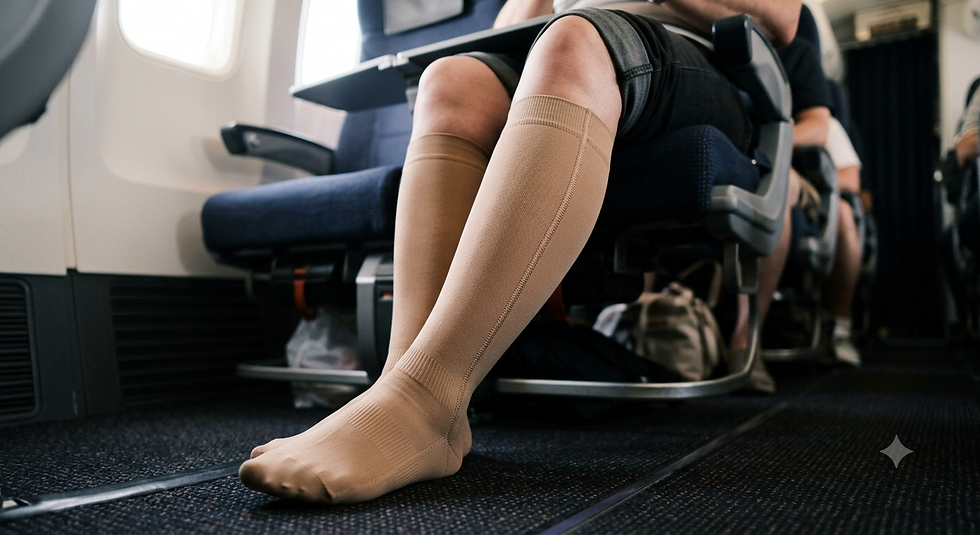
One of the most important — and often overlooked — use cases is swelling and edema. For patients who experience significant lower leg or foot swelling, compression stockings are often the ideal recommendation. But compression stockings require a certain level of mobility and flexibility to put on, and in cases where swelling is severe or the patient has limited range of motion, getting them on can be genuinely difficult or even impossible. In these situations, a properly fitted diabetic sock is an excellent alternative: it won't constrict the swelling the way a regular sock would, and its non-binding construction will expand gently with the limb rather than digging in. It won't provide the therapeutic graduated pressure of a true compression stocking — but it will protect the skin and keep the patient far more comfortable than a standard sock.
Here's another practical indicator that often goes unnoticed: if you take off your socks at the end of the day and see indentations or marks left in the skin around your ankle or lower leg, that's a signal worth paying attention to. It means your sock elastic is tight enough to leave an impression — and that level of constriction is not ideal for anyone, particularly if it's happening regularly. In some cases, it can be an early sign that mild edema or circulation changes are developing.
Switching to a diabetic sock eliminates that constriction and removes one unnecessary pressure source from your daily routine.
With that in mind, diabetic socks may be beneficial for anyone who:
Has diabetes — particularly those with any degree of neuropathy, circulation changes, or a history of foot wounds
Has swelling or edema and is unable to tolerate or apply compression stockings due to mobility limitations or the severity of swelling
Notices sock indentations or marks on the skin at the end of the day — even without a formal diagnosis
Has peripheral neuropathy from any cause
Has peripheral artery disease or chronic venous insufficiency
Has chronically sensitive or easily irritated feet
Spends long hours on their feet and wants to reduce friction and moisture buildup
Is an older adult whose skin is more fragile and circulation less robust
If you're unsure whether diabetic socks are appropriate for your situation, that's exactly the kind of question to bring to your foot care appointment — we're happy to advise.
What to Look for When Choosing Diabetic Socks
Not every product labelled as a "diabetic sock" is created equal. When assessing the quality of a diabetic sock, look for:
True seamless construction — not just reduced seams, but genuinely seamless knitting
Non-binding tops that don't leave marks on the skin
Moisture-wicking or breathable fabric composition
Appropriate padding in the heel and ball of the foot — not excessive, but enough to cushion these high-pressure areas
A proper fit — not too tight, not so loose that the sock bunches inside the shoe
This is why we chose to carry Simcan specifically. They meet a genuine clinical standard rather than simply being marketed as diabetic-friendly — and that distinction matters when we're recommending something to our patients.
A Note on Regular Socks and When They're Fine
We want to be clear: not everyone needs diabetic socks. For people with healthy circulation and sensation, good-quality regular socks that fit well and are made from breathable materials are perfectly adequate.
The recommendation shifts when circulation, sensation, or skin integrity is compromised — because at that point, what goes on your feet every day becomes part of your active self-care, not just an afterthought.
If you have diabetes and you're still wearing the same socks you've always worn, it's worth having a conversation about whether a change is warranted.
Our Approach to Products at Sole Renewal
We want to be transparent about how we approach products in our clinic: we carry things we genuinely believe in and that we recommend to our patients because they make a clinical difference — not because we're pushing sales. You will never feel pressured to purchase anything when you visit us.

If we mention a product, it's because it's relevant to your care. And if you'd like to know more about any of the products we carry — including our full range of Footlogix foot care products, Sigvaris compression stockings, and Biotime orthopedic footwear — just ask. We're always happy to explain why we recommend what we do.
Questions About the Right Socks for Your Feet?
It sounds like a small thing — but the right socks, worn consistently, can make a meaningful difference to the health and comfort of your feet. If you're not sure what's right for your situation, bring the question to your next appointment. We'll give you an honest answer based on what your feet actually need.
Book an appointment at www.solerenewalfootcare.ca. Let's make sure every layer of your foot care is working for you.
— Natalie Doucet, RPN | Sole Renewal Footcare & Wellness | Oshawa, Ontario


Comments