
Travel and Compression: Why What You Wear on Your Feet Matters on Long Flights
Before you pack your bags this summer, read this first
Summer travel season is here — and whether you're heading to Europe, down south, or across the country, chances are you're spending more time than usual sitting on planes, in cars, or on trains. What most travellers don't think about is what all of that sitting is doing to their feet and legs.
The good news is that a little preparation goes a long way. Here's what you need to know about travel, circulation, and why compression might be the most underrated thing you can pack this summer.
What Happens to Your Feet and Legs When You Travel
When you sit for extended periods — particularly in a confined space like an airplane cabin — several things happen in your lower body that work against you. Gravity pulls fluid downward into your legs and feet. The cramped position limits normal muscle movement, which means your calf muscles aren't pumping blood back up toward the heart the way they do when you walk. Cabin pressure at altitude further reduces the oxygen levels available to your blood, and low cabin humidity contributes to mild dehydration, which thickens the blood slightly and slows circulation.
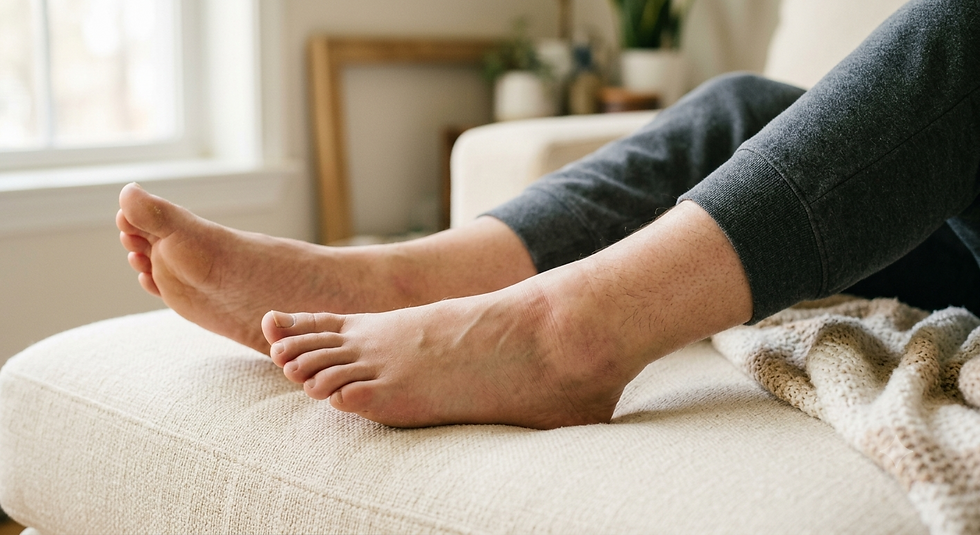
The result for many people is swollen, heavy, uncomfortable legs and feet by the time they land. For most healthy individuals, this is temporary and resolves once you're up and moving again. But for others, particularly those with existing circulation concerns, the stakes are higher.
Who Is Most at Risk During Travel
While anyone can experience travel-related swelling, certain people need to be particularly mindful:
People with chronic venous insufficiency or varicose veins — existing circulation challenges are compounded by prolonged sitting
Those with a history of deep vein thrombosis (DVT) or blood clots
Pregnant travellers — pregnancy already increases the risk of DVT, and travel adds an additional layer
People who have recently had surgery, particularly to the legs or abdomen
Those with lymphedema or chronic swelling in the lower limbs
Older adults, whose circulation is naturally less efficient
People with diabetes, particularly those with any degree of neuropathy or peripheral vascular involvement
If any of the above apply to you, please speak with your healthcare provider before any long-haul travel. This is especially important if you are unsure whether compression stockings are appropriate for your specific situation.
What Is Compression and How Does It Help?
Compression stockings are specially designed hosiery that apply graduated pressure to the legs — firmer at the ankle, gradually decreasing up the leg. This graded compression helps support the walls of the veins and encourages blood to move upward rather than pooling in the lower legs and feet.
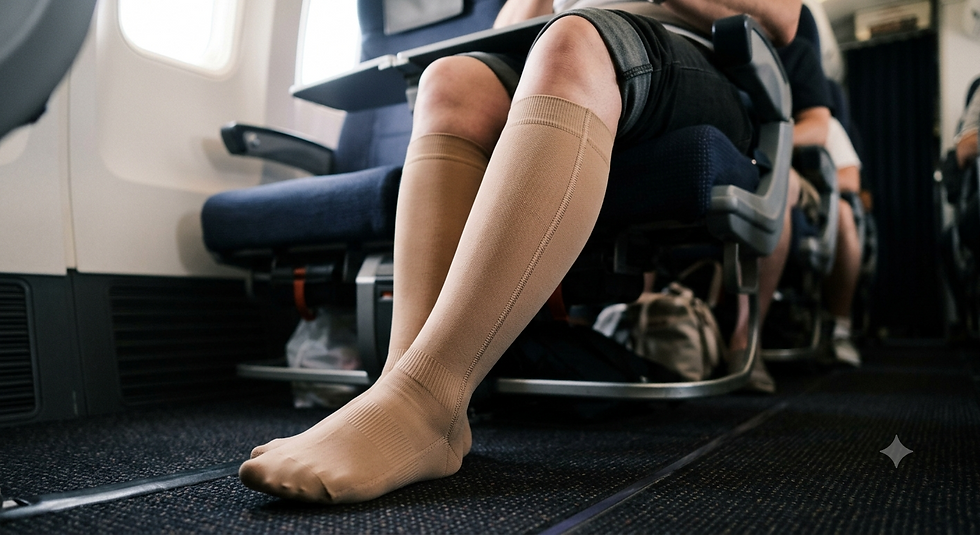
During travel, compression stockings help counteract exactly what prolonged sitting does to your circulation. They reduce swelling, improve venous return, decrease the feeling of heaviness and fatigue in the legs, and for high-risk individuals, may significantly reduce the risk of DVT.
They are not a one-size-fits-all product, and they are not all created equal. Compression stockings come in different compression levels — measured in millimetres of mercury (mmHg) — and the right level for you depends on your specific health history and the nature of your travel. This is why proper fitting and guidance from a healthcare provider matters.
Sigvaris: The Compression Brand We Trust
At Sole Renewal, we carry Sigvaris compression stockings — a brand widely regarded as the gold standard in medical-grade compression. Sigvaris products are designed with both clinical effectiveness and wearability in mind, which matters when you're asking someone to wear compression for a 10-hour flight.
Unlike many over-the-counter compression socks, Sigvaris stockings are available in specific compression levels and sizes to ensure a proper, therapeutic fit. Wearing the wrong size or the wrong compression level can be uncomfortable at best — and counterproductive at worst. Our team can help you understand what's right for your needs and make sure you're fitted correctly before you travel.
Travel Tips Beyond Compression
Compression is one of the most effective tools you have for travel-related foot and leg health — but it works best alongside a few other habits:
Stay hydrated. Dehydration thickens the blood and slows circulation. Drink water consistently throughout your journey and limit alcohol and caffeine, which are both dehydrating.
Move when you can. On flights, get up and walk the aisle every hour or two if possible. When seated, flex and circle your ankles regularly — this activates the calf muscle pump and keeps blood moving.
Choose your footwear wisely. Avoid tight shoes or boots for travel. Your feet will naturally swell during the journey, and constrictive footwear makes this worse. Opt for supportive, roomy shoes or ask us about travel-appropriate footwear options.
Put compression on before you board. Compression is most effective when it's on before swelling starts, not after. Put your stockings on at home, before you leave for the airport.
Elevate when possible. On overnight flights or long drives, try to elevate your feet slightly when you rest.
What About Road Trips and Long Car Journeys?
Everything we've said about flights applies equally to long car journeys — and in some ways, car travel can be worse, because passengers have even less opportunity to move than on a plane. If you're embarking on a road trip this summer, plan regular stops to get out, walk around, and stretch. And yes — compression stockings are just as relevant in the car as in the air.

Travelling With a Pre-Existing Foot Condition
If you're managing a condition that affects your feet or circulation — diabetes, lymphedema, peripheral artery disease, or a recent wound or surgery — travel requires extra planning. Book a foot care appointment before you leave so your nurse can assess your current status, advise on compression and footwear, and flag anything that warrants attention before you go.
It's also worth knowing what to watch for during and after travel: new swelling that doesn't resolve, redness or warmth in one leg, pain in the calf, or any skin changes. If any of these occur, seek medical attention promptly.

Heading Somewhere This Summer? Let's Get Your Feet Ready First.
Whether you're a frequent flyer or planning your first big trip in years, a little preparation makes a meaningful difference. Our team can assess your circulation, recommend the right compression level and fit for your needs, and make sure your feet are in the best possible shape before you set off.
Book your pre-travel appointment at www.solerenewalfootcare.ca. Safe travels — we'll see you when you're back!
— Natalie Doucet, RPN | Sole Renewal Footcare & Wellness | Oshawa, Ontario


Comments