
Why We Don't Recommend Shellac or Gel Nail Polish for Your Toenails
A nurse's honest take on a trend we see causing more harm than people realize
We promised in a recent blog that this topic deserved its own space — and here it is. If you love the long-lasting shine of gel or shellac polish on your toenails, this might not be what you want to hear. But as nurses who see the aftermath every week, we feel strongly that you deserve the full picture.
This isn't about telling you what to do with your nails. It's about making sure you understand the risks — especially if you fall into any of the higher-risk categories we'll walk through below.
What Makes Gel and Shellac Different From Regular Polish
Regular nail polish sits on top of the nail and is removed with standard polish remover — a relatively gentle process. Gel and shellac polishes are different. They're cured under UV or LED light, bond much more tightly to the nail surface, and require soaking in acetone or aggressive filing to remove.
That bonding strength is exactly what makes them long-lasting — and exactly what makes them problematic for foot health.
The Problem With Hidden Ingrown Toenails
Gel and shellac polish makes it significantly harder to see what's actually happening with your nail. A nail that's beginning to grow into the skin at the edge — the earliest, most treatable stage of an ingrown nail — is easily hidden under a layer of opaque polish.
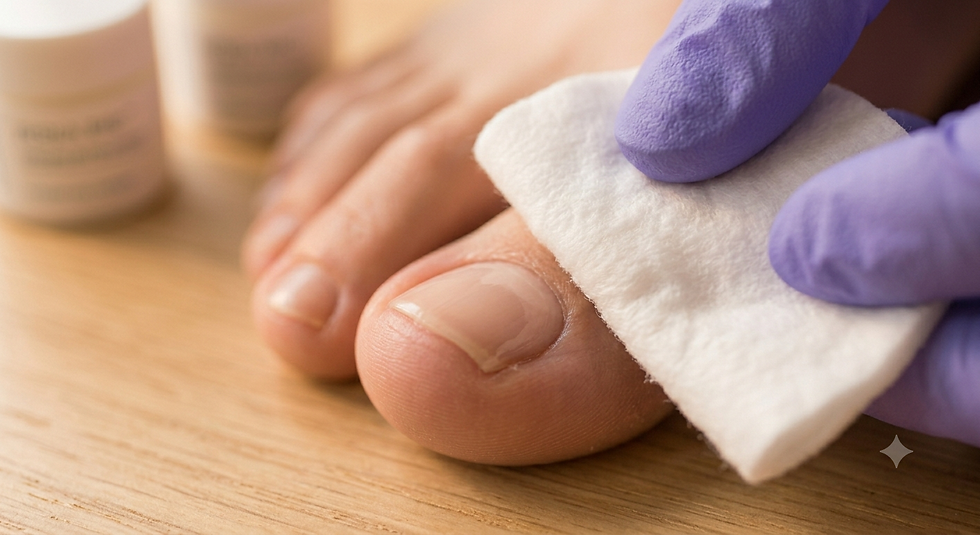
By the time the polish is removed weeks later, what could have been caught and corrected early has often progressed into something far more uncomfortable, and sometimes infected. We see this pattern often: a patient comes in for what they thought was a minor issue, removes their polish for the appointment, and we discover a nail that's been quietly worsening for weeks, completely out of sight.
Ingrown toenails are far easier to manage in the early stages. Hiding the nail removes your ability to catch the problem when it matters most.
The Connection to Fungal Nail Infections (Onychomycosis)
Onychomycosis — fungal nail infection — thrives in warm, dark, moist environments. Unfortunately, that's almost exactly what gel and shellac polish creates on your nail surface.
The tight seal of gel polish traps moisture against the nail plate and blocks airflow. If any moisture gets underneath the polish — which happens more easily than people expect — it can sit there for weeks, creating ideal conditions for fungal growth. The acrylic and gel removal process itself, which often involves aggressive filing or soaking, can also damage the nail plate and create entry points for fungus to take hold.
Once a fungal infection sets in under gel polish, it's also much harder to detect early. The same polish that hides ingrown nails also hides the early discolouration and texture changes that signal a fungal infection is developing.
If you have a history of fungal nail infections, gel and shellac polish is one of the easiest ways to invite a recurrence.
How Shellac Can Actually Make Ingrown Toenails Worse
Beyond simply hiding an ingrown nail as it develops, shellac polish has another effect that many people don't realize: it cures and hardens the nail in the exact position it happens to be growing in at that moment.
Regular nail polish stays flexible. Shellac, by contrast, is cured under UV or LED light into a hard, fixed shell. If your nail has any tendency to curve inward at the edges — which is often the very beginning of an ingrown nail — shellac locks that shape in place as the nail continues to grow. Instead of allowing the nail to grow outward naturally, the rigid shellac coating can guide the nail further into the surrounding skin.

This means shellac doesn't just obscure an existing problem — in some cases, it can actively contribute to creating one. For patients who are already prone to ingrown toenails, this is a significant and often overlooked risk.
If you have a history of ingrown nails, this is one of the clearest reasons to think twice before your next shellac appointment.
Pregnancy: A Time When Visibility Matters Most
During pregnancy, the body experiences significant changes in circulation, fluid retention, and hormone levels — all of which can affect the feet and nails. Swelling, changes in nail growth, and increased susceptibility to fungal infections are all common during this time.

This is exactly the period when being able to clearly see and monitor your nails matters most. We gently recommend that our pregnant patients avoid gel and shellac polish during pregnancy, simply so that any changes — which are more likely to occur during this time — can be caught and addressed quickly.
So What Do We Recommend Instead?
We're not asking you to give up polished, put-together looking toenails. Here's what we suggest instead:
Choose regular nail polish. It still gives you colour and shine, but it comes off easily and doesn't trap moisture against the nail.
Remove polish between applications. Give your nails a break to breathe and allow for proper inspection.
If you do choose gel or shellac, have your nails professionally assessed first. A foot care nurse can check that there are no underlying concerns before you commit to several weeks of covered nails.
Watch for any of the high-risk factors above. If you have diabetes, a history of ingrown nails or fungal infections, or are pregnant, we'd strongly encourage you to stick with breathable, easily removable nail care.
This Isn't About Judgment
We know gel and shellac polish are popular for good reason — they look polished for weeks with minimal upkeep. We're not here to make anyone feel bad about their choices. We simply believe you deserve to make that choice with full information, especially when it comes to something that affects your health.
If you've been getting gel polish regularly and want a professional set of eyes on your nails and skin, we're always happy to help. No judgment, just honest clinical guidance.
Questions About Your Nail Care Routine?
If you're unsure whether gel or shellac is affecting your nail or foot health, or if you'd simply like a professional assessment before your next appointment, we're here to help.
Book an appointment at www.solerenewalfootcare.ca. We're always happy to talk it through.
— Natalie Doucet, RPN | Sole Renewal Footcare & Wellness | Oshawa, Ontario


Comments